


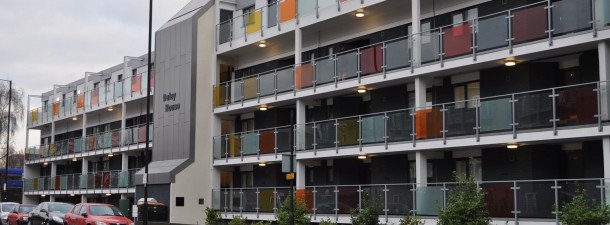
With the arrival of the Government’s Green Deal scheme just around the corner, BREEAM Refurbishment for domestic buildings has been launched at the Housing 2012 conference in Manchester. The new BREEAM Domestic Refurbishment is available for use on projects ranging from home improvements such as replacing windows and fitting new insulation, through to developments ranging in size from multiple to single dwellings.
To ensure that the new BREEAM standard drives real change, the process has been independently peer reviewed and extensively trialled in a pilot scheme involving more than 200 properties. The scheme has also been developed to align with the Government’s Green Deal (due for launch in autumn 2012) which will make grants available to householders to make energy-efficiency improvements to their homes.
Carol Atkinson, Chief Executive of BRE Global, said: ‘The new scheme helps building owners and occupiers to save operating costs and reduce the environmental impact of refurbishments. It pinpoints those elements of the refurbishment that will bring the greatest returns and provides a methodology, software tool and certification for those responsible for the delivery of sustainable domestic refurbishment projects. As well as addressing overall sustainability issues, the scheme can help specific initiatives to tackle fuel poverty, reduce flooding and security risks, and enhance the health and wellbeing of tenants and householders. Certification under the scheme will provide market recognition for residential buildings that have had sustainable and higher quality refurbishments.’
One of the projects involved in the piloting of the scheme was the refurbishment of the Cornbrook Court in Manchester. ‘Cornbrook Court is a former 1970s traditional ‘H’-shaped care home that has been refurbished to provide modern, self-contained flats for vulnerable people in a supportive and safe environment.
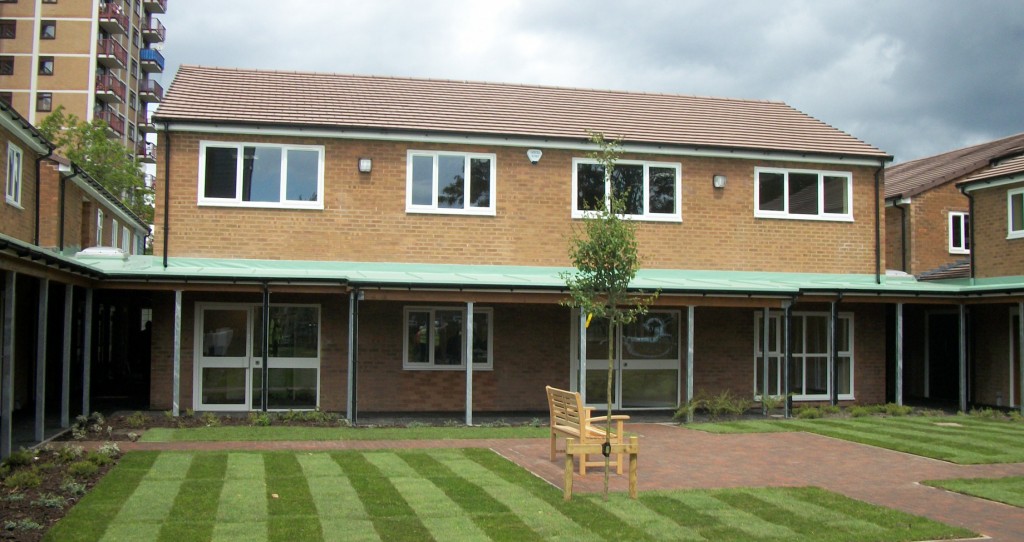
The central courtyard, communal lounge, training facilities and reception area are designed to balance independence and security. Cedral cladding and render finishes give the building a new identity and act as a catalyst for further regeneration in the area.
The building achieved a BREEAM Domestic Refurbishment ‘Very Good’ at the post-refurbishment stage. Making extensive use of existing material, the project has improved the building’s energy efficiency, minimised potable water use, designed the flats to meet the requirements of Lifetime Homes and be Secured by Design, and installed a home office.
A spokesperson from Pozzoni LLP said: “The economic downturn coupled with increasing energy prices has brought refurbishment and retrofit to the fore. We need to do everything we can to reduce the energy demands of our existing housing stock to deliver affordability. Measuring these improvements and ensuring the right works are carried out can only be done with an assessment method specifically designed for this purpose. The new BREEAM Domestic Refurbishment assessment method is a bespoke, robust tool to benchmark future refurbishments and has filled a gap in a growth sector. Pozzoni is pleased to have helped develop the new standard and to receive one of the first pilot certificates for our scheme.”
Another project involved in piloting the scheme was the refurbishment of five blocks of flats in Hammersmith, London. Forming the Du Cane Road site, the flats were built in the late 1970s using the ‘Bison’ wall-frame construction system. Standards of construction at the time, particularly with regard to insulation, were often relatively low and the flats suffered from poor energy efficiency, condensation and high heating costs.
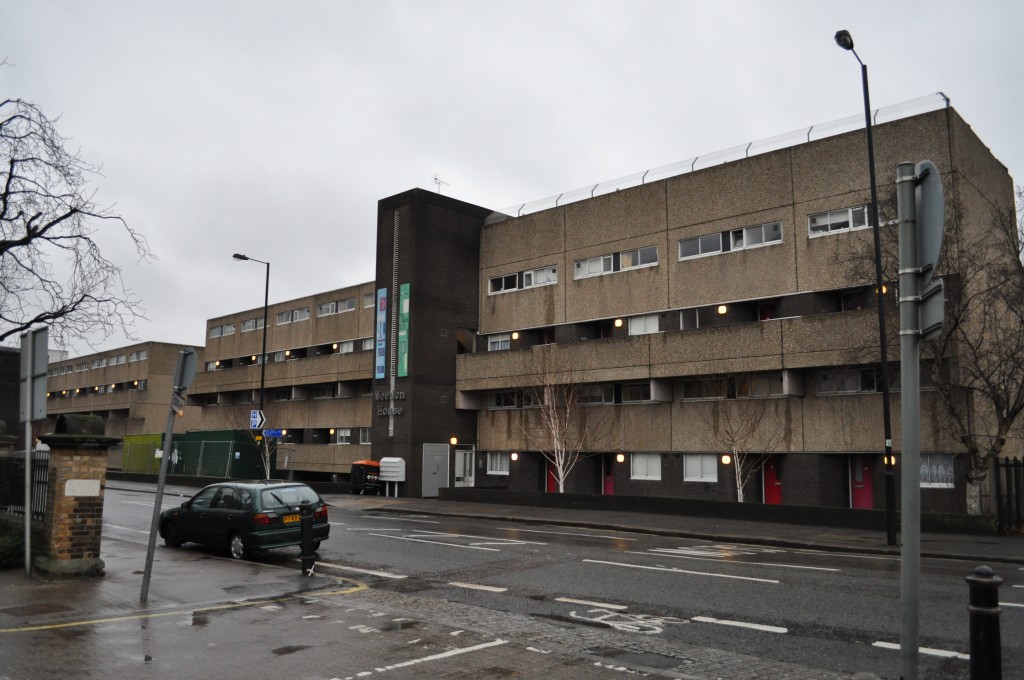 Du Cane Road prior to refurbishment
The site is sandwiched between a main road and an above-ground section of the Central line. Demolition and new build had been considered, but site constraints and costs made refurbishment a more cost-effective way of improving the flats.
The client, Ducane Housing Association, wanted a design that:
- did not depend on renewable technology (because of cost and suitability considerations) or mains gas (due to safety concerns);
- could be carried out in phases so that existing occupants could be moved into new / refurbished dwellings, thereby maintaining some rental income;
- was of ‘Decent Homes’ standard.
The project achieved a ‘Very Good’ BREEAM Domestic Refurbishment-Pilot rating at the post-construction stage.
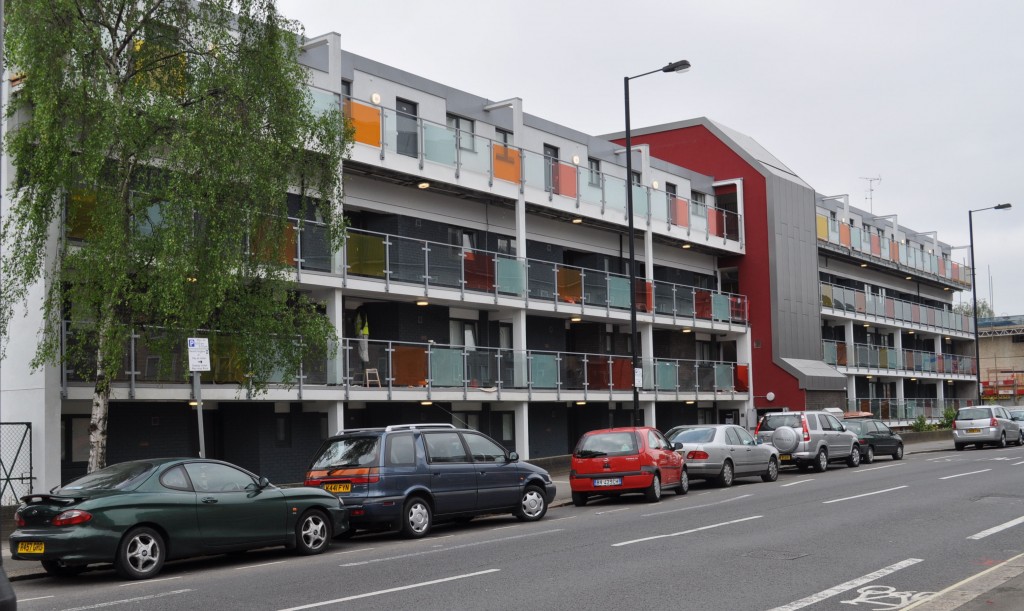 Du Cane Road following refurbishment
The refurbishment followed the ‘fabric first’ approach, reducing energy demand by adding wall insulation and installing new windows and doors with lower u-values. Water efficiency features have reduced the water consumption to less than 105 litres per person per day. To reduce domestic waste, a 30-litre fixed recycling bin has been provided in the kitchens.
Post-occupation monitoring carried out by the Developer (Apollo Housing) has found a considerable improvement in levels of thermal comfort, lower bills and the elimination of condensation.
The BREEAM Domestic Refurbishment technical manual is now available on the BREEAM website (www.breeam.org/domrefurb). The scheme will be live for project registration on 2 July 2012, with the race already on for the first projects to gain certification under the scheme. Anyone wanting to qualify as a BREEAM Domestic Refurbishment Assessor can attend a training course – details of which can be found on the website.













No Comments
There are currently no comments on Driving sustainable refurbishment in domestic buildings. Perhaps you would like to add one of your own?