


The first comprehensive study of gibbons in Vietnam in over a decade found that three of the six species (the eastern and western black gibbons and the northern white-cheeked gibbon) are perilously close to extinction, and the remaining three have suffered massive population reductions.
The publication, The Conservation Status of Gibbons in Vietnam, co-authored by Fauna & Flora International (FFI) and Conservation International (CI), details the population declines that Vietnam’s gibbon species have suffered over the last 10 years. Gibbons have now disappeared from much of their historical range in Vietnam, and the few remaining viable populations are restricted to protected areas that in almost all cases lack the standard of protection needed to ensure their survival.
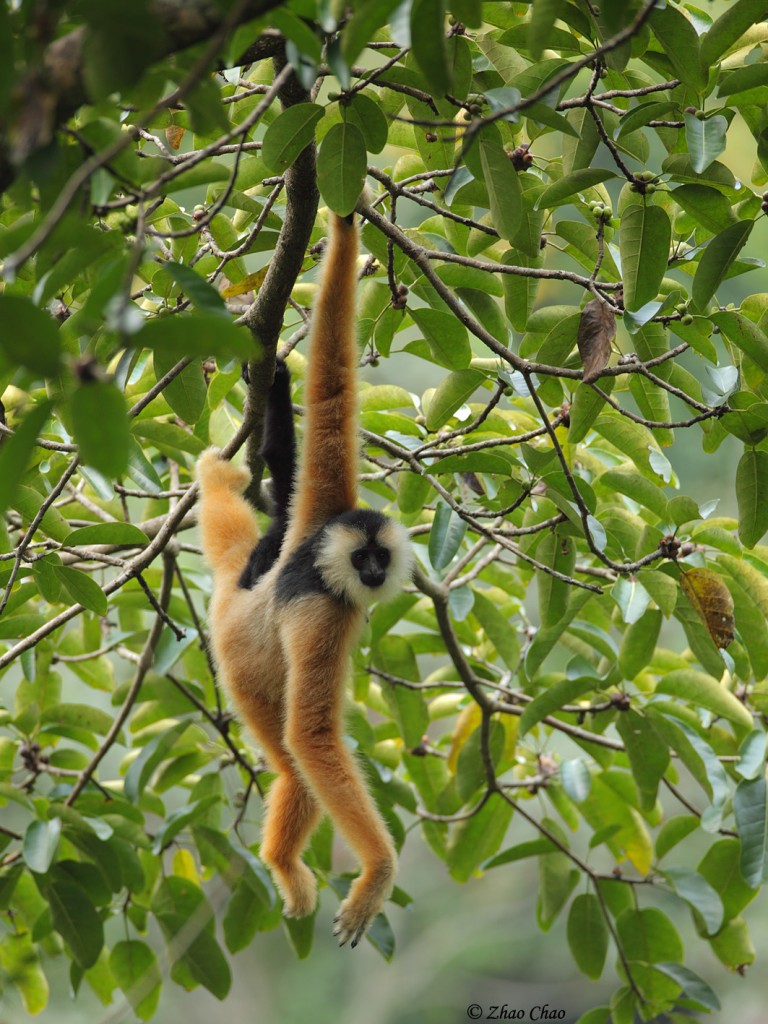 PHOTO: Female eastern black gibbon (also known as cao vit gibbon) © Zhao Chao
“Vietnam is an incredibly important location for gibbons globally, with six different species, all of which are threatened by extinction”, said Ben Rawson, CI’s Regional Primatologist for the Greater Mekong Program and Coordinator of the Primate Specialist Group, Indochina.
“The general public, local stakeholders, especially local government, need to be more aware and supportive of protecting these critically endangered populations,” Rawson said. Awareness of the plight of the gibbons nationally is very low, which is a major contributing factor to their ongoing decline. “While gibbons are afforded the highest level of legal protection in Vietnam, this is not widely appreciated by either law enforcement officials or local communities. Now largely restricted to protected areas, gibbon populations are being whittled away, individual by individual, to the point where many areas no longer contain viable populations.”
“Tackling illegal hunting and wildlife trade are key to retaining Vietnam’s wonderful gibbon fauna,” says Rawson. Hunting and habitat loss through land conversion have driven the dramatic recent declines in gibbon populations. Habitat loss continues inside protected areas, through illegal logging, agricultural encroachment and infrastructure developments, such as hydropower dams and roads. Improved access to the forest for hunters and the reduced carrying capacity for local gibbon populations are major issues for gibbon conservation nationally.
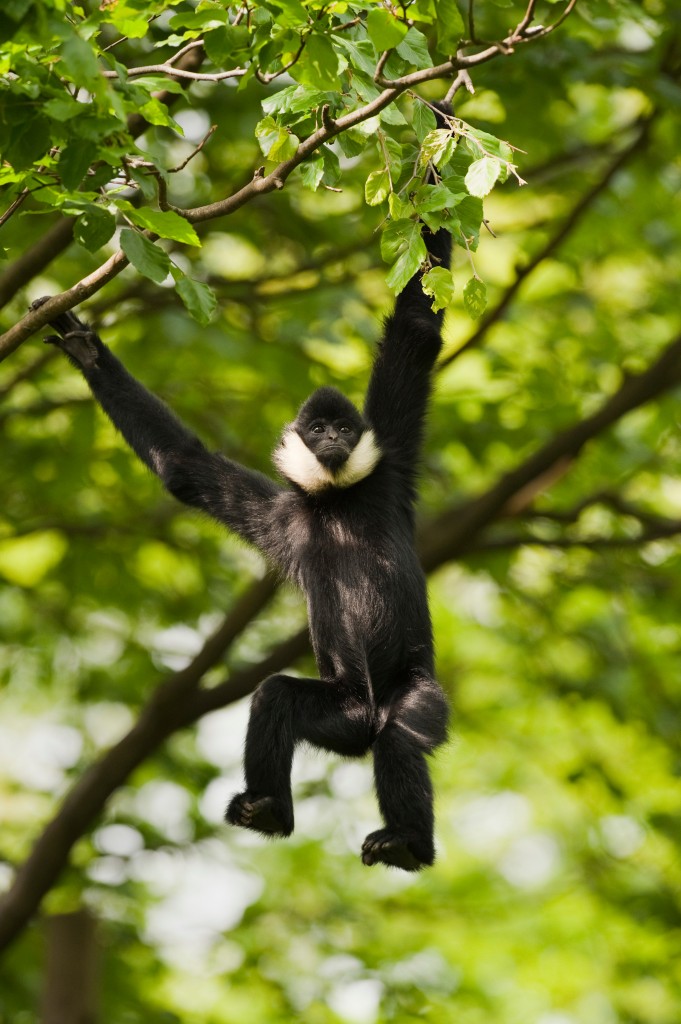 PHOTO: Northern white-cheeked gibbon (Nomascus leucogenys). Captive, Apenheul, Netherlands. Adult male. Found in northern Vietnam and Laos. Endangered species. © Terry Whittaker
Habitat loss also causes population fragmentation, leading to ever smaller and more vulnerable subpopulations. Hunting for food and the wildlife trade continues to be a serious issue due to demands for the pet trade and unfounded beliefs in the medicinal properties of the animals bodies.
“All threats to gibbons are manmade – habitat loss, habitat fragmentation and hunting,” said Dr Ulrike Streicher, Wildlife Veterinarian, Primate Programme Manager, FFI Vietnam. “To thrive, gibbon populations need relatively large tracks of reasonably intact forest and this is increasingly rare in Vietnam. Their protection must be an immediate conservation priority for Vietnam. The small local successes we have thus far achieved in gibbon conservation, for example in the Cao Vit Gibbon Conservation Area in Cao Bang Province, give reason for hope, but a lot more needs to be done.”
“In most of the known gibbon ranges in Vietnam, gibbon populations have been driven to the brink of extinction, as a result gibbons are now commonly reported as locally extinct. All gibbon taxa in Vietnam are on the brink of extinction, we must act now or our next generation will not have the opportunity to see gibbons in their natural habitats ”, said Nguyen Manh Ha, researcher, Centre for Natural Resources and Environmental Studies (CRES),Vietnam National University. “Gibbons are wonderfully charismatic and gentle creatures, which do not harm anyone’s livelihoods, but charm us with their beauty, acrobatics, song, and they are our closest relatives in Vietnam. If nothing can be done to secure the long-term future of gibbons in Vietnam, what hope is there for the rest of Vietnam’s biodiversity and the fragile environment its human population depends upon?”
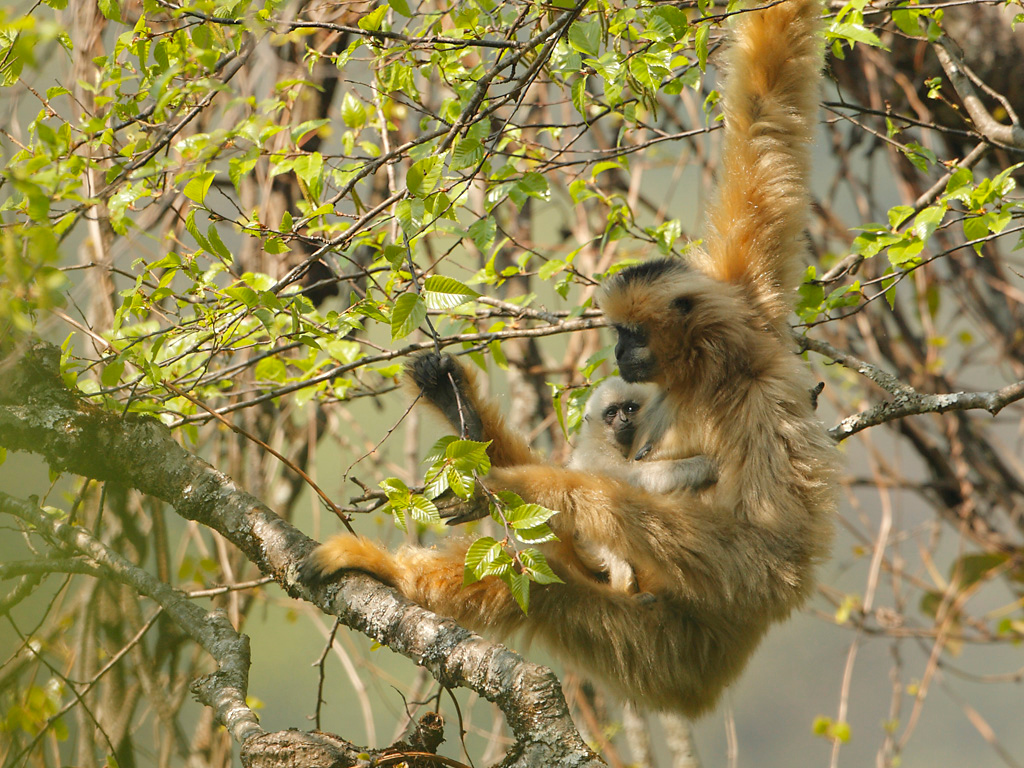 PHOTO: Western black crested gibbon female with infant © Zhao Chao
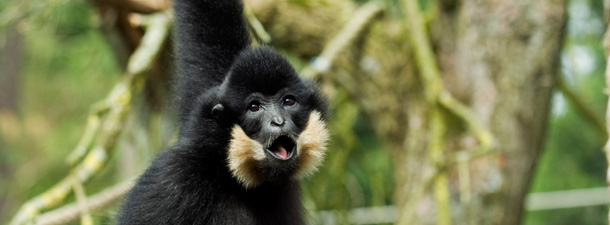
FEATURE PHOTO TOP: Yellow-cheeked Gibbon, (Nomascus gabriellae) Captive, Netherlands. Critically endangered species from Vietnam and Cambodia. © Terry Whittaker













No Comments
There are currently no comments on Extinction looms for gibbons in Vietnam. Perhaps you would like to add one of your own?