Perhaps it’s no accident that the EU has given its most (childishly) amusing acronym to the Waste Electrical and Electronic Equipment Directive. Electronic waste is an issue few of us want to talk about, so we need all the encouragement we can get.
The mountain of disguarded laptops, abandoned hairdryers and forgotten mobile phones is only growing, as technology upgrades at an ever faster rate. Any number of artists have turned to the electronic waste mountain as a source of artistic materials, not to mention subject matter.
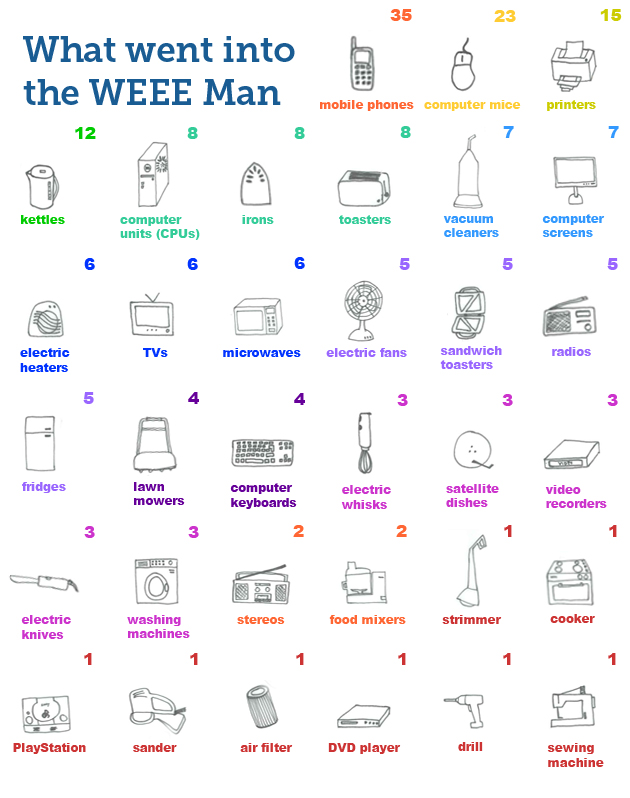
WEEE Man was a particularly memorable example, a modern colossus built in 2005 from the electronic waste one family was then expected to throw out in a lifetime - 3.3 tonnes.
The WEEE directive is meant to be the counterpoint - regulations that EU member states are meant to translate into domestic law, setting targets to recover discarded electronics and recycle them, diverting them from landfill. Manufacturers are meant to take responsibility for what happens to the electronic products they sell, once consumers are ready to throw them out. The directive has recently been updated, setting more ambitious targets - from 2019, manufacturers are meant to collect 85 per cent of waste generated from electronics placed on the market in the preceeding three years. The directive has also been expanded to include solar panels, and a handful of other products.
All countries were meant to have updated their WEEE legislation to reflect the new targets by 14 February. However, the consultancy ENVIRON has produced this handy map showing which countries have met the target, which ones are late, and which ones haven’t even produced draft legislation yet:
We still have some way to go. Countries represented in red and yellow on the map should be getting a move on - if WEEE Man was being built today, he would have to be bigger. I couldn’t find an equivalent figure for how much electronic waste a British family would now be expected to produce. But in 2012, 49 million tons of the stuff was generated around the world. By 2017, this is expected to rise to 65.4 million tons.